5 hr
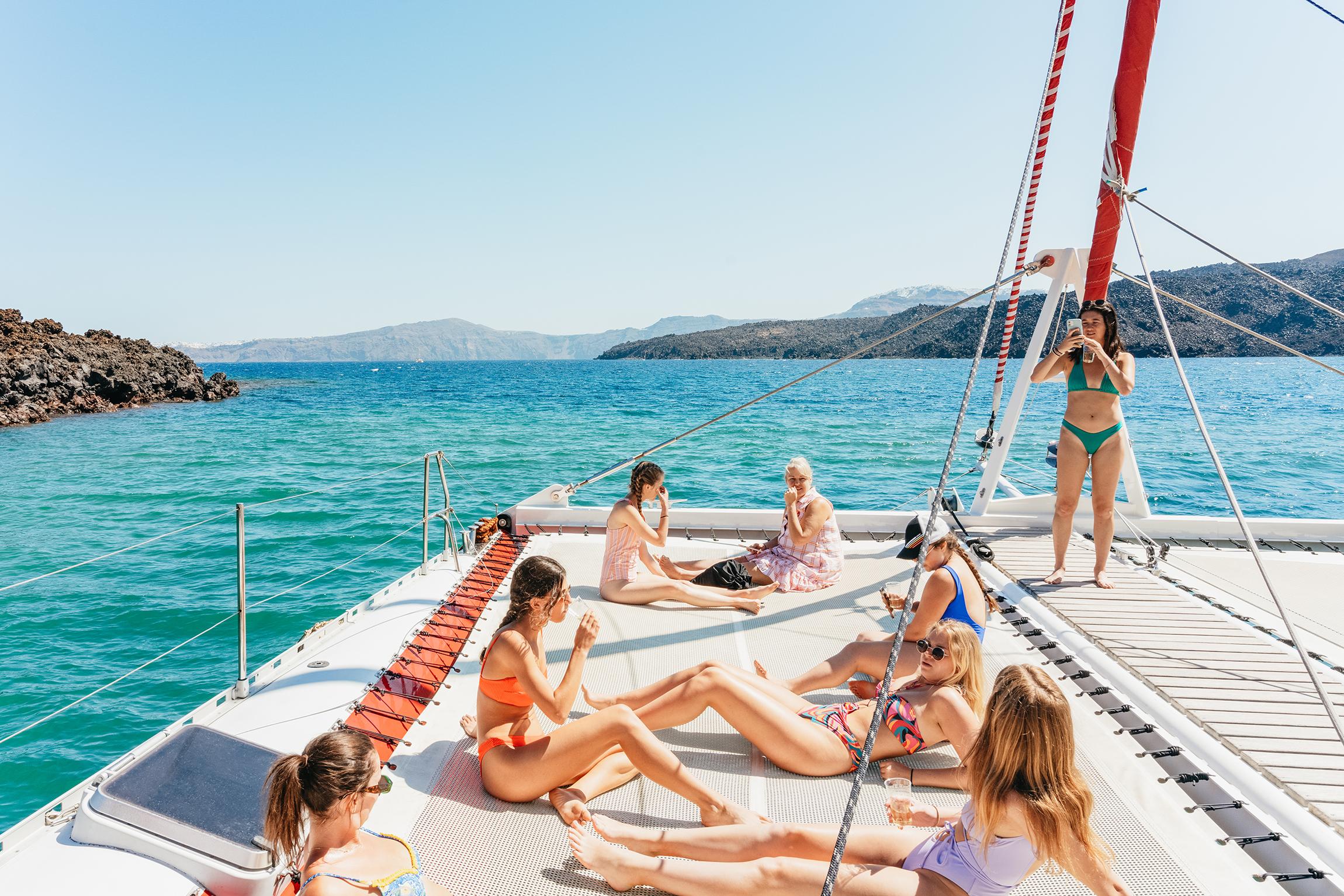
Santorini Catamaran Sailing with BBQ and Swim Stops
- Entry ticket
- Mobile voucher
- Valid same day
- Free cancellation
Santorini Wine and Food Tour — Volcanic Vineyards & Tasting Experiences
Assyrtiko vines rooted in ash, paired with island meze
Compare fares, pick the fit — all bookings are mobile-voucher and eligible for free cancellation where shown.
5 hr
9 hr
5 hr
Selecting the right santorini wine and food tour allows visitors to explore the island's unique volcanic viticulture through diverse cellar door experiences. These curated santorini wine and food tour tours offer varying levels of depth, from standard cellar tastings to comprehensive vineyard and cave tours.
| Standard Cellar Tasting Walk-in & Flight-based |
Top pick Full Estate Experience Guided Tour & Pairing |
|
|---|---|---|
| Price Range | 15–55 EUR | 95–210 EUR |
| Inclusions | Tasting flights | Museum tour, 3 wineries, pairings |
| Access Method | Walk-in / Reservation | Scheduled small-group booking |
| Average Duration | 1 hour | 4–5 hours |
| What is included | Wines and snacks | Guided tastings, transport, snacks |
| Best for | Flexible budget travelers | First-timers seeking history |
| See tickets & prices |
Verdict: For the best value during your santorini wine and food tour tour, choose the full estate experience if you want guided transport and history.
Worth it for guided tours with inclusions
A santorini wine and food tour delivers strong value when you book a package that bundles transport, tastings, and meals—otherwise you'll spend comparable amounts cobbling together self-guided visits. Individual winery tastings run 15 to 50 EUR per stop, and renting a car or hiring taxis between volcanic vineyards adds another 40 to 80 EUR daily. Organized santorini wine and food tour tours typically include three to five wineries, expert-led tastings of Assyrtiko and Vinsanto varietals, traditional meze platters, and round-trip hotel transfers for 80 to 120 EUR total. The Small-Group Santorini Sunset Wine Experience pairs cave-cellar tastings with caldera views, while the Full-Day Tour combines volcanic wines with Oia sunset access—both eliminating the logistics headache of navigating narrow village roads after sampling. Independent travelers comfortable driving and skipping sommelier commentary can visit wineries for free (tastings paid separately), but you lose the narrative context that connects indigenous grape training methods to the island's pumice soil. For culinary-focused visitors wanting structured vineyard immersion without rental-car hassles, guided options justify the premium.
Bottom line: Book a guided package if you want curated volcanic wine education with logistics handled; skip santorini wine and food tour tickets if you prefer spontaneous, self-paced vineyard hopping with your own wheels.
They complement each other; most visitors who do both call the sunset catamaran cruise the more thrilling excursion, while the wine tour offers a refined, culinary-focused alternative.
|
Top pick Wine & Food Tour |
Caldera Boat Tour | |
|---|---|---|
| Primary Activity | Wine tasting & local snacks | Sailing & swimming |
| View focus | Vineyard & horizon | Volcanic caldera cliffs |
| Duration | 1.5–3 hours | 4–6 hours |
| Intensity | Relaxed & seated | Active & outdoors |
| Best for | Culinary enthusiasts | Adventure & sunset seekers |
| Pricing | 15–50 EUR (tastings) | 100+ EUR (average cruise) |
| Booking | Recommended in advance | Required in advance |
| See tickets & prices |
Verdict: If you prioritize a deep dive into Assyrtiko varietals and Cycladic bites, choose a santorini wine and food tour, but opt for a cruise if you seek the iconic island landmarks from the water.
Hand-picked experiences loved by thousands of travelers
4 to 4.5 hours
Free Cancellation
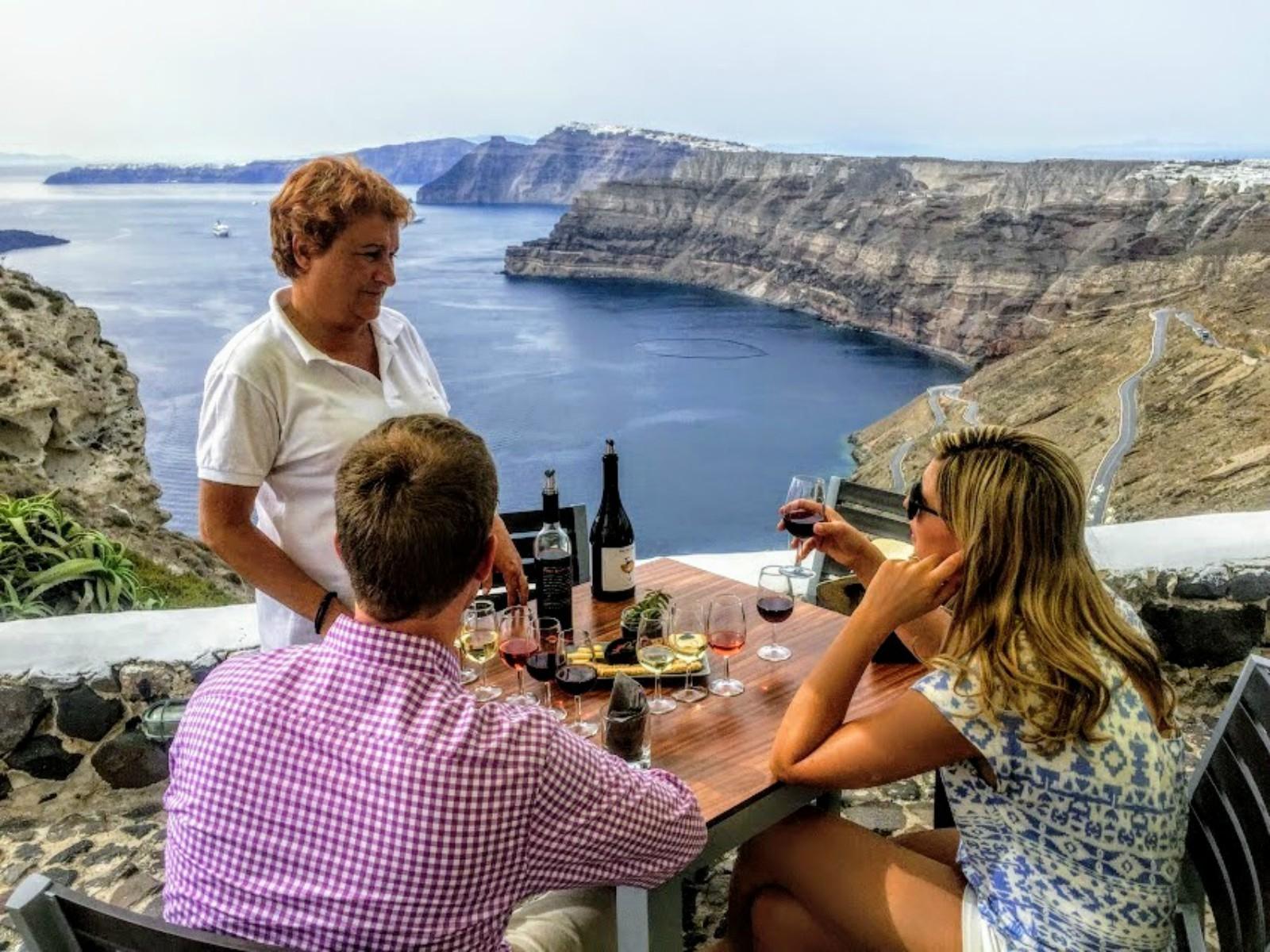
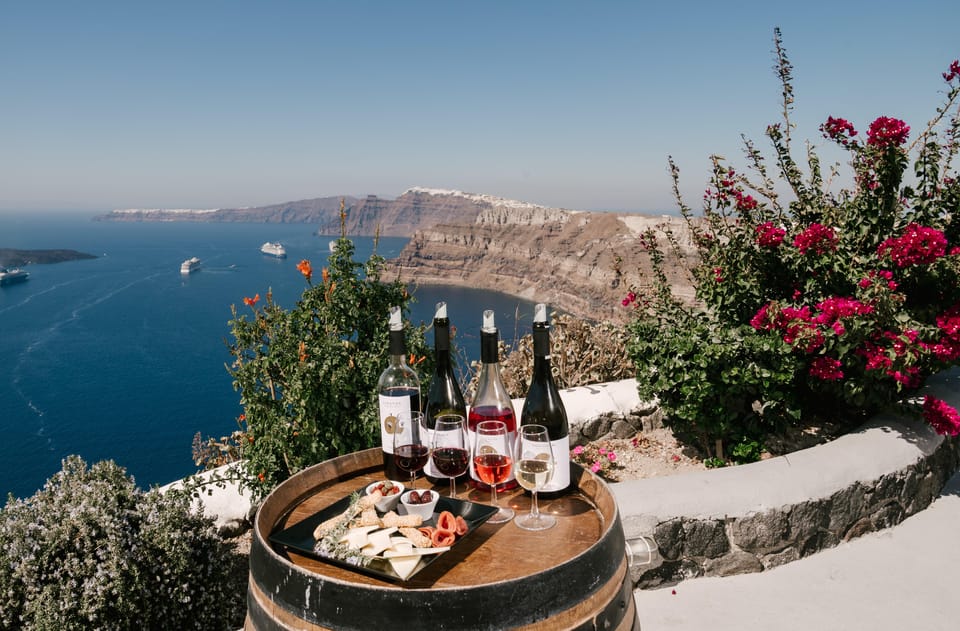
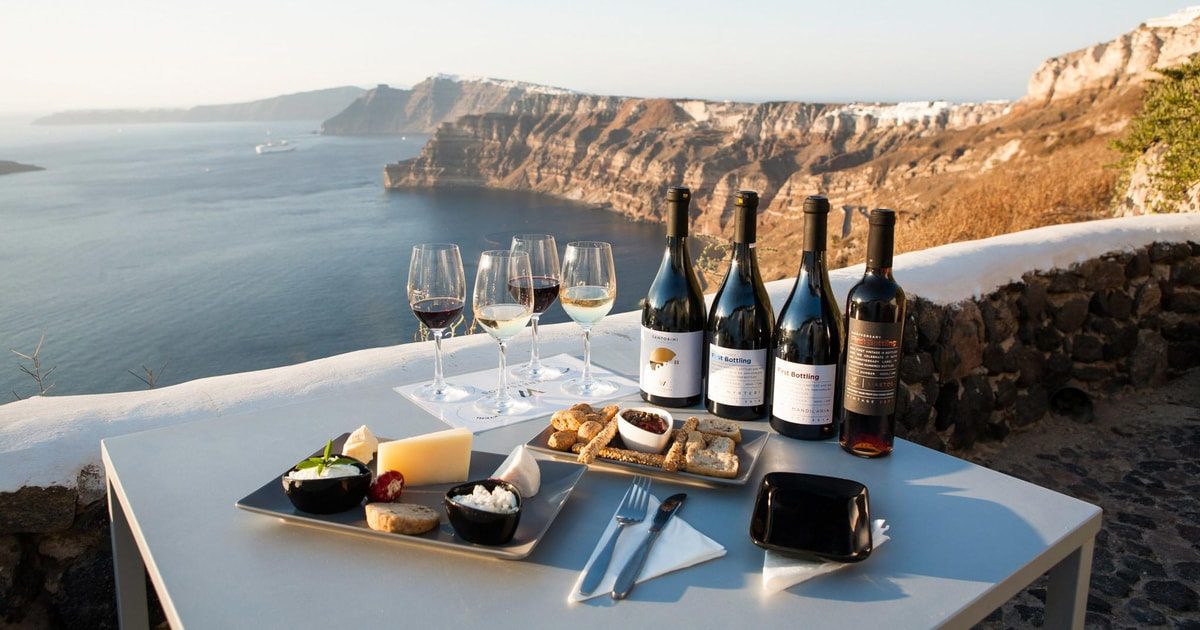
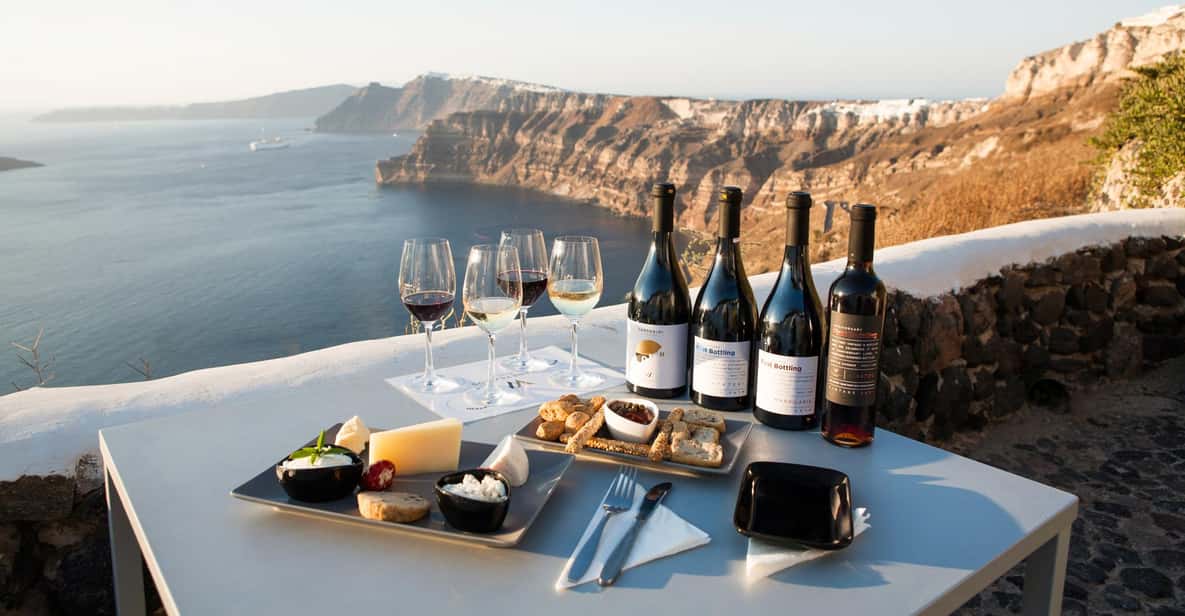
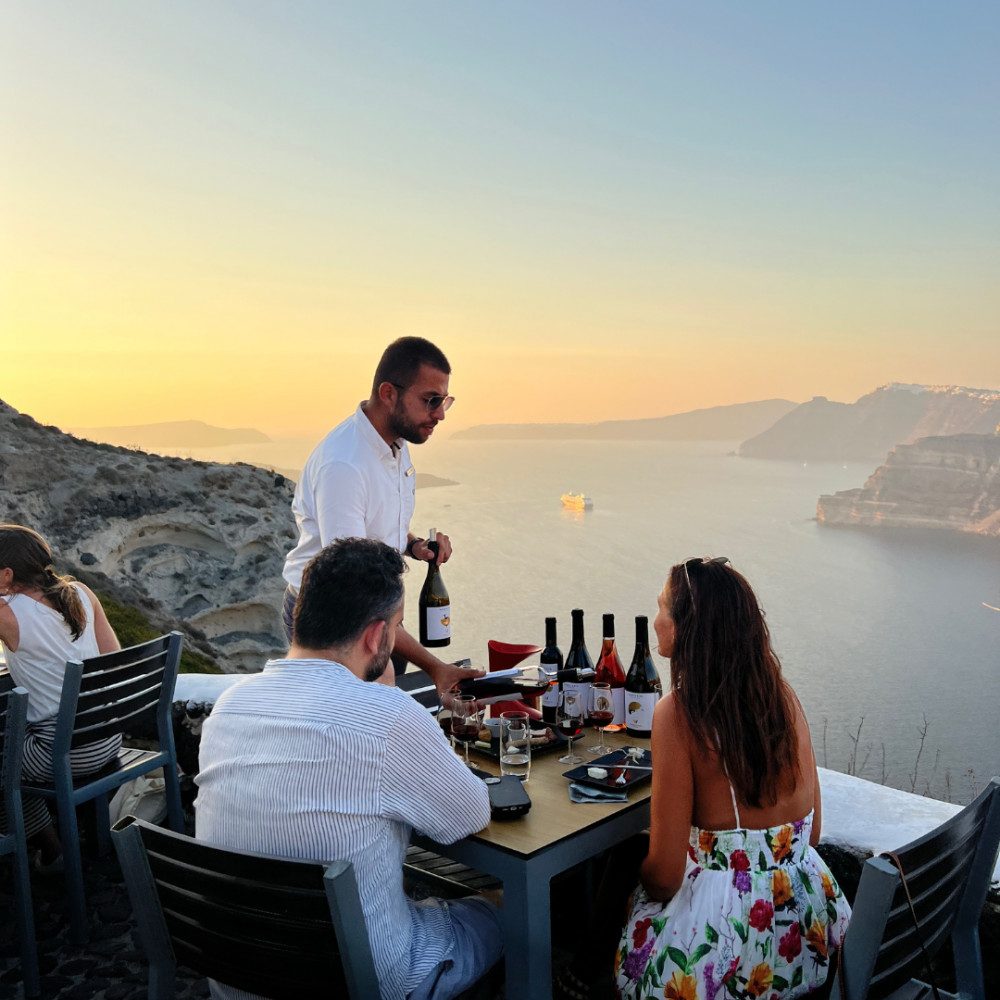
Discover Santorini's volcanic vineyards across three wineries with tastings of 12 wines and sunset views
4 hours
Free Cancellation
Sample a dozen Greek wines at three celebrated cellars while discovering the island's ancient viticulture
4.5 hours
Free Cancellation
Explore three renowned vineyards across Santorini while sampling a dozen wines and learning ancient winemaking traditions.
4 hours
Free Cancellation
Explore Santorini's capital through its flavors on a 4-hour guided food journey with stunning caldera views
3 hours
Free Cancellation
Discover Santorini's renowned wine heritage through visits to three distinct wineries with guided tastings
3 hours
Free Cancellation
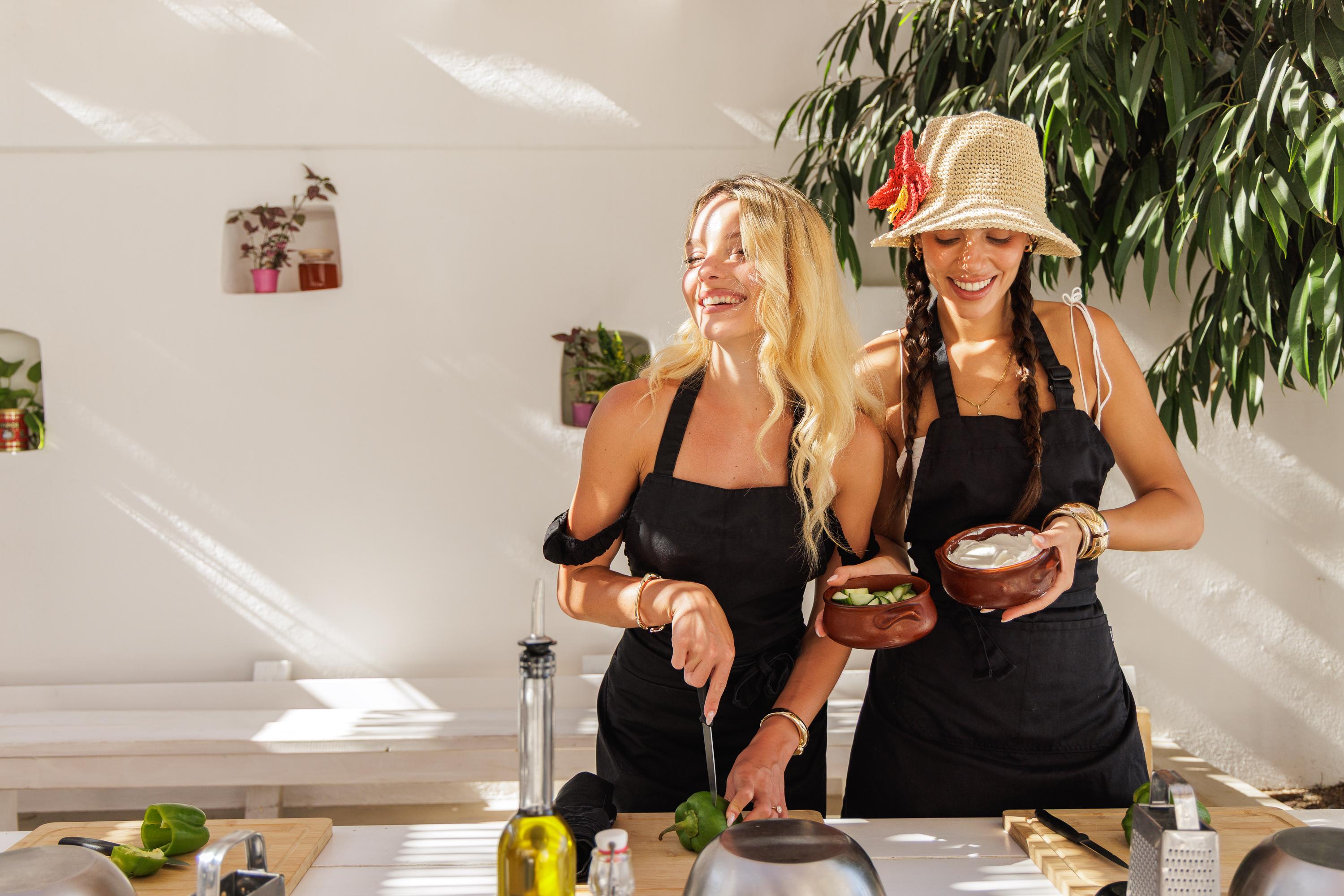
Master traditional recipes at a seaside venue, then feast on your homemade dishes with Santorini wine
4.5 hours
Free Cancellation
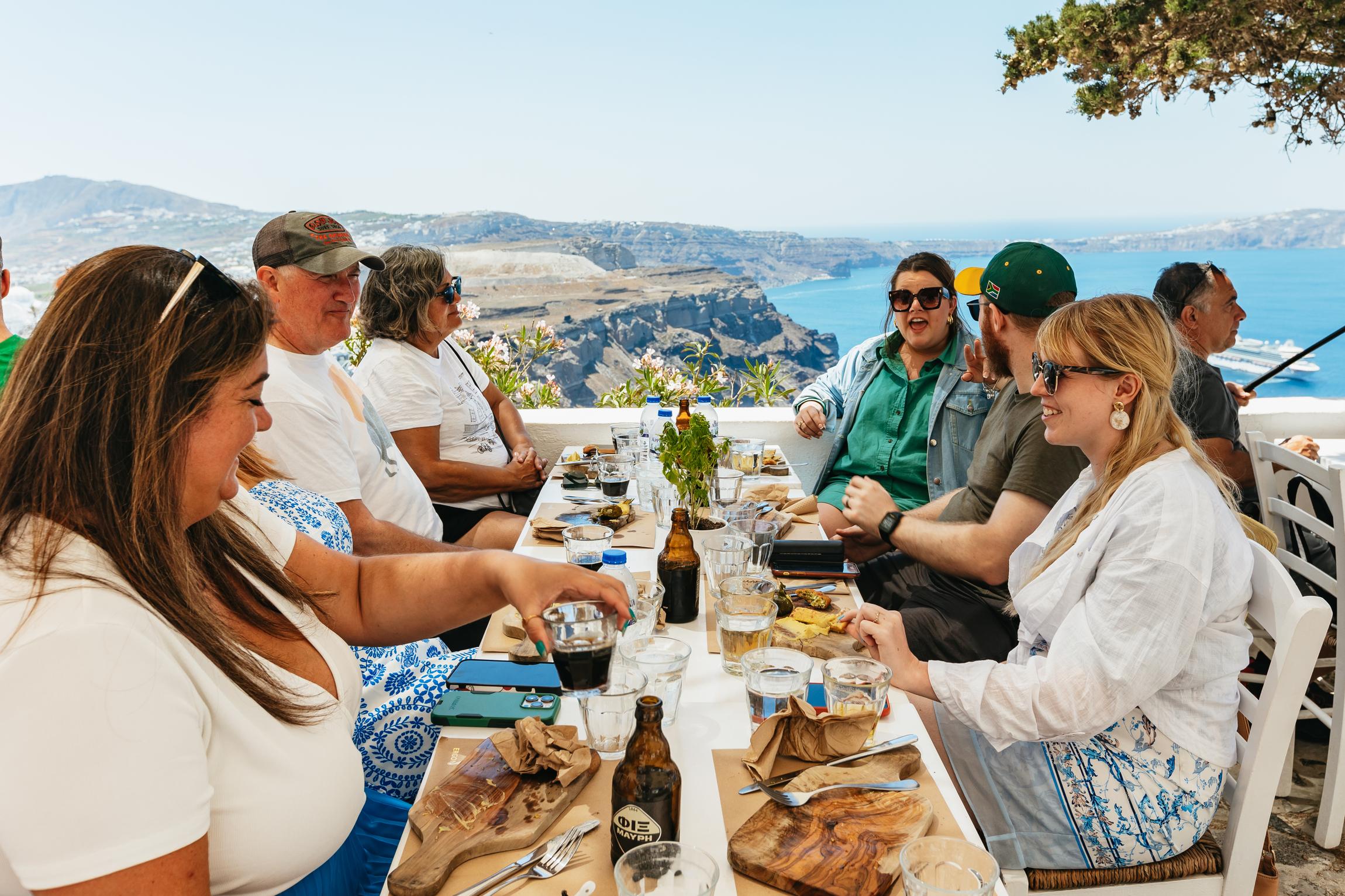
Sample 12 wines and 3 craft beers across Santorini's top wineries, paired with local cheeses and snacks
4.5 hours
Free Cancellation
Discover volcanic wines at three celebrated estates with tastings, museum visits, and expert guidance
Meet at the designated winery site
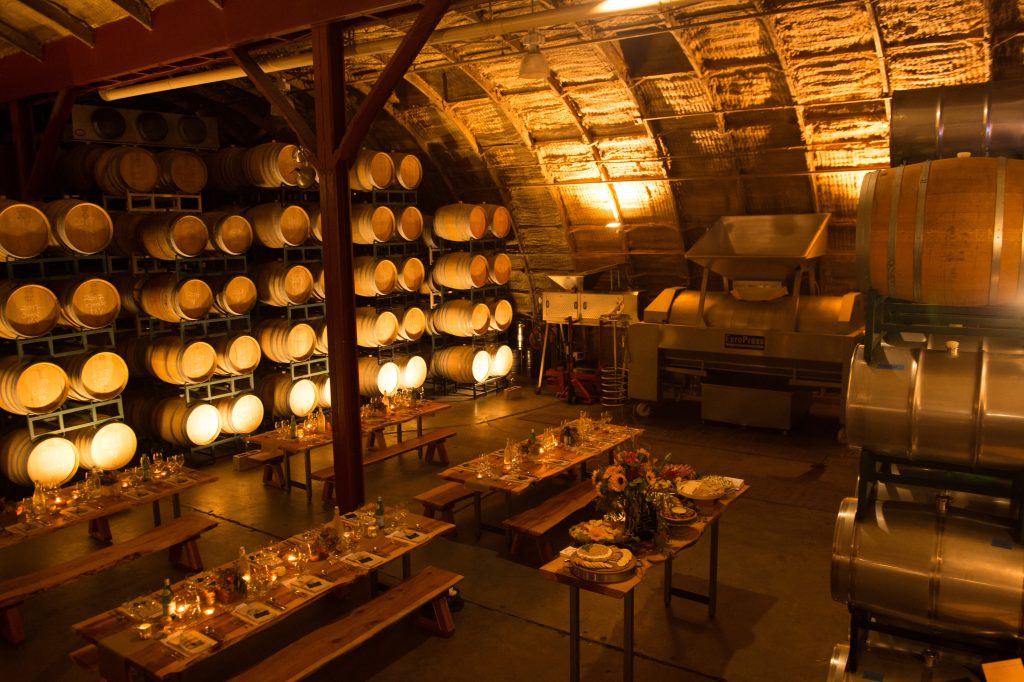
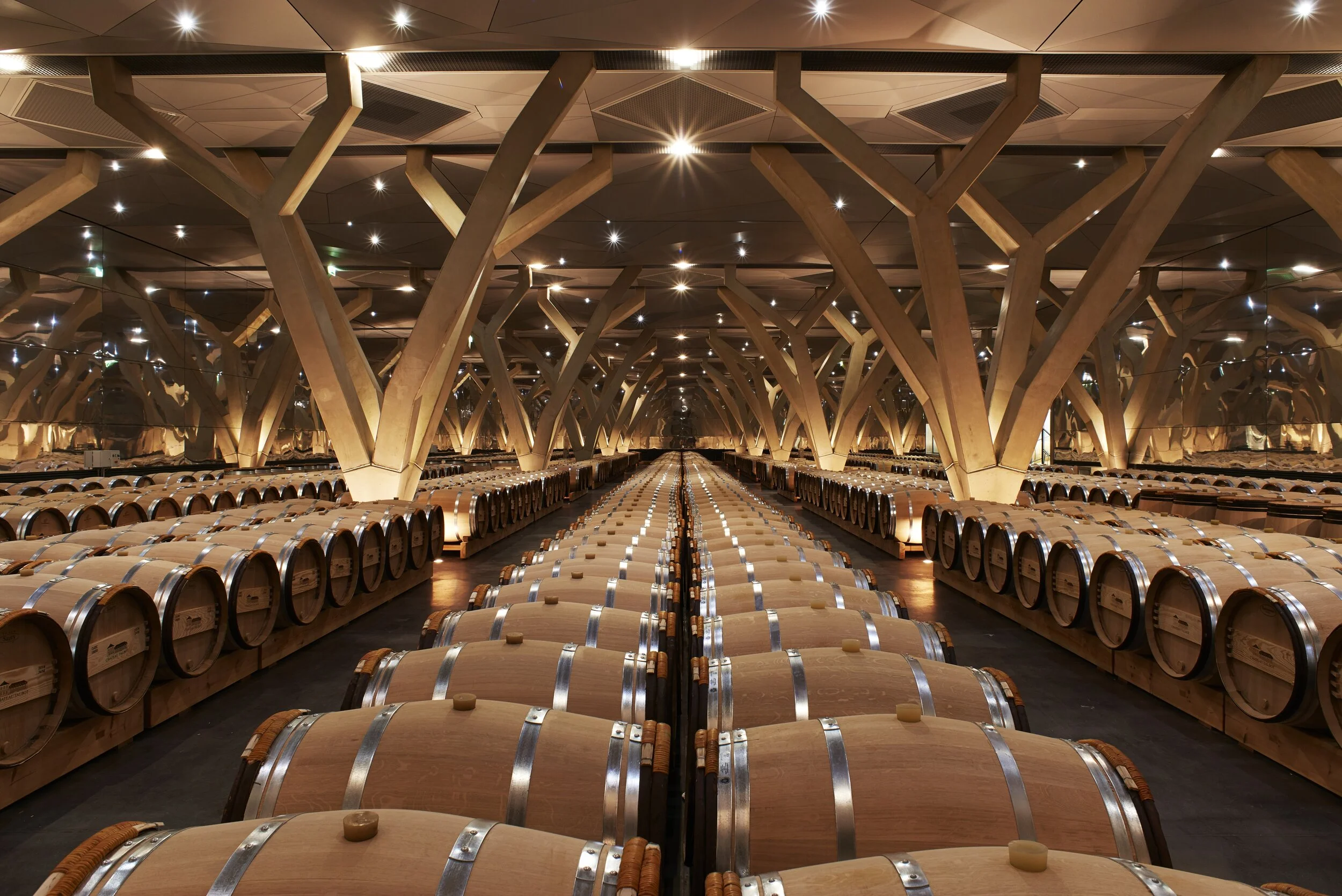
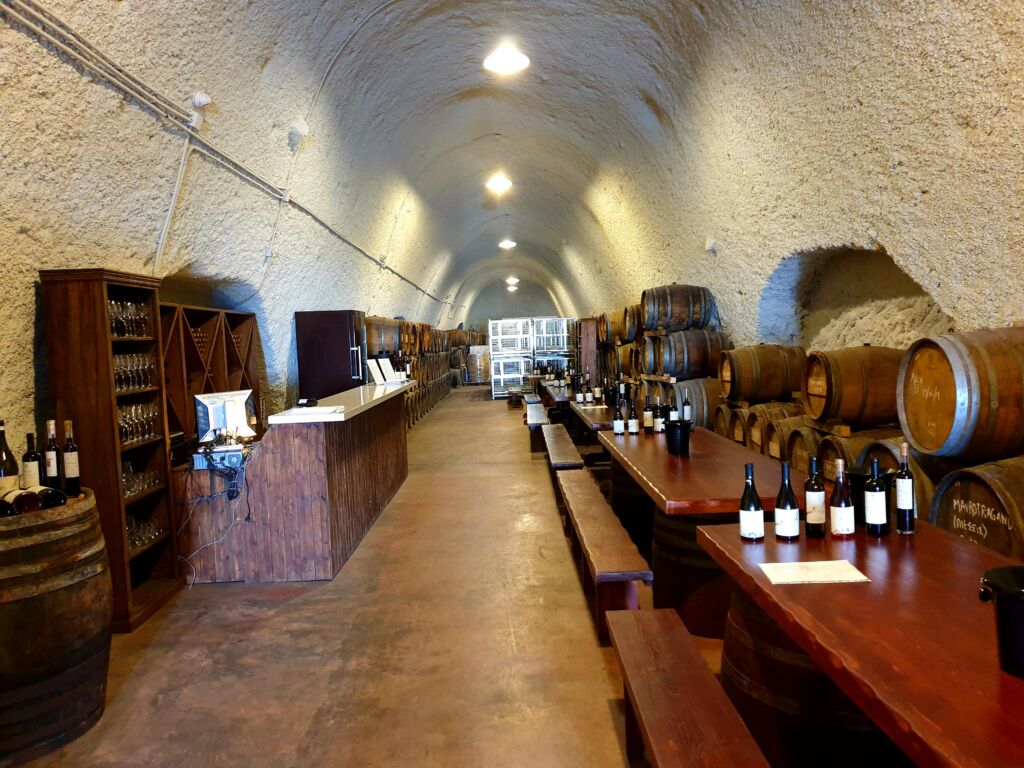
Tour the subterranean cave cellars
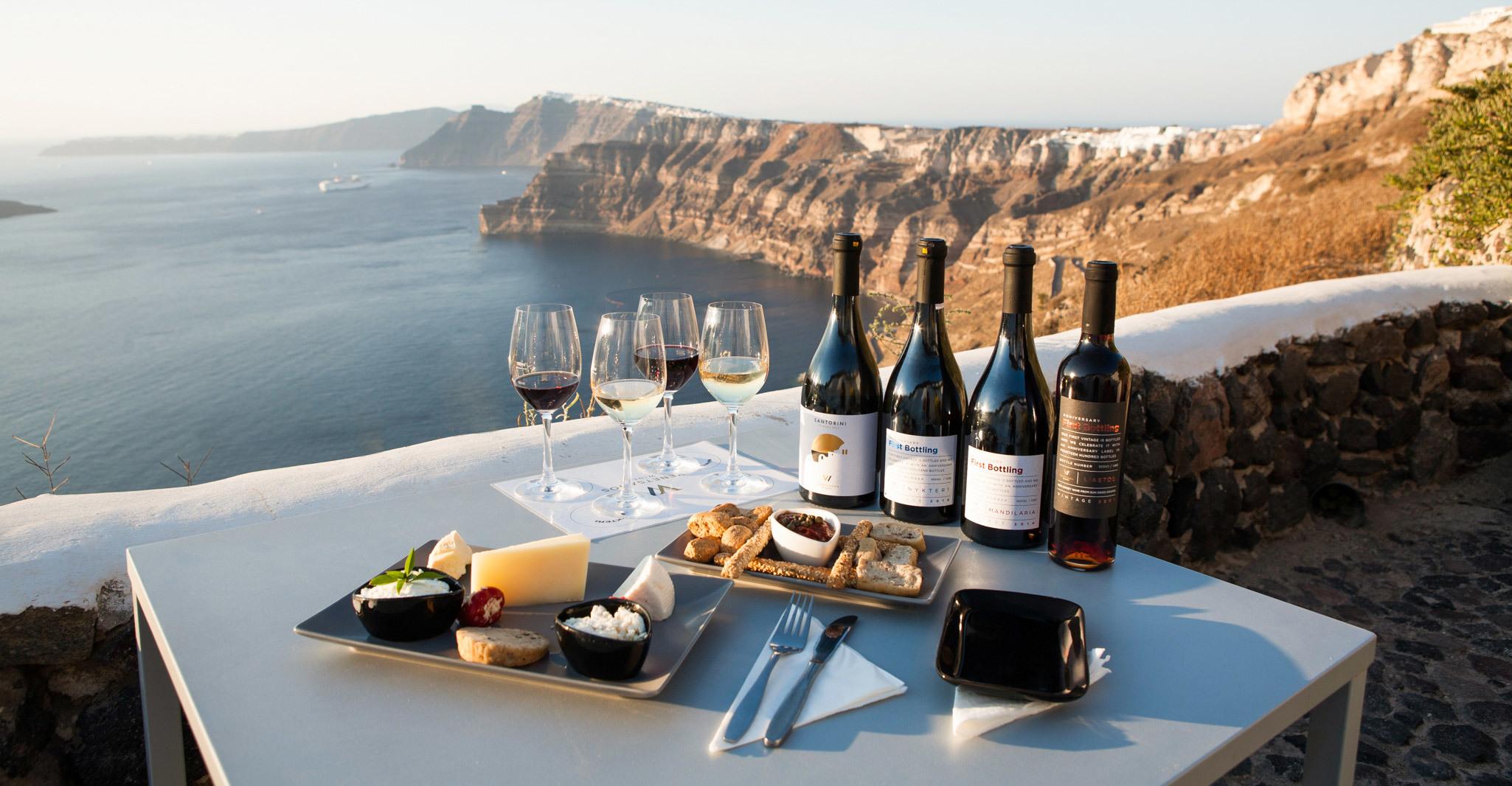
Sample local Assyrtiko with food pairings
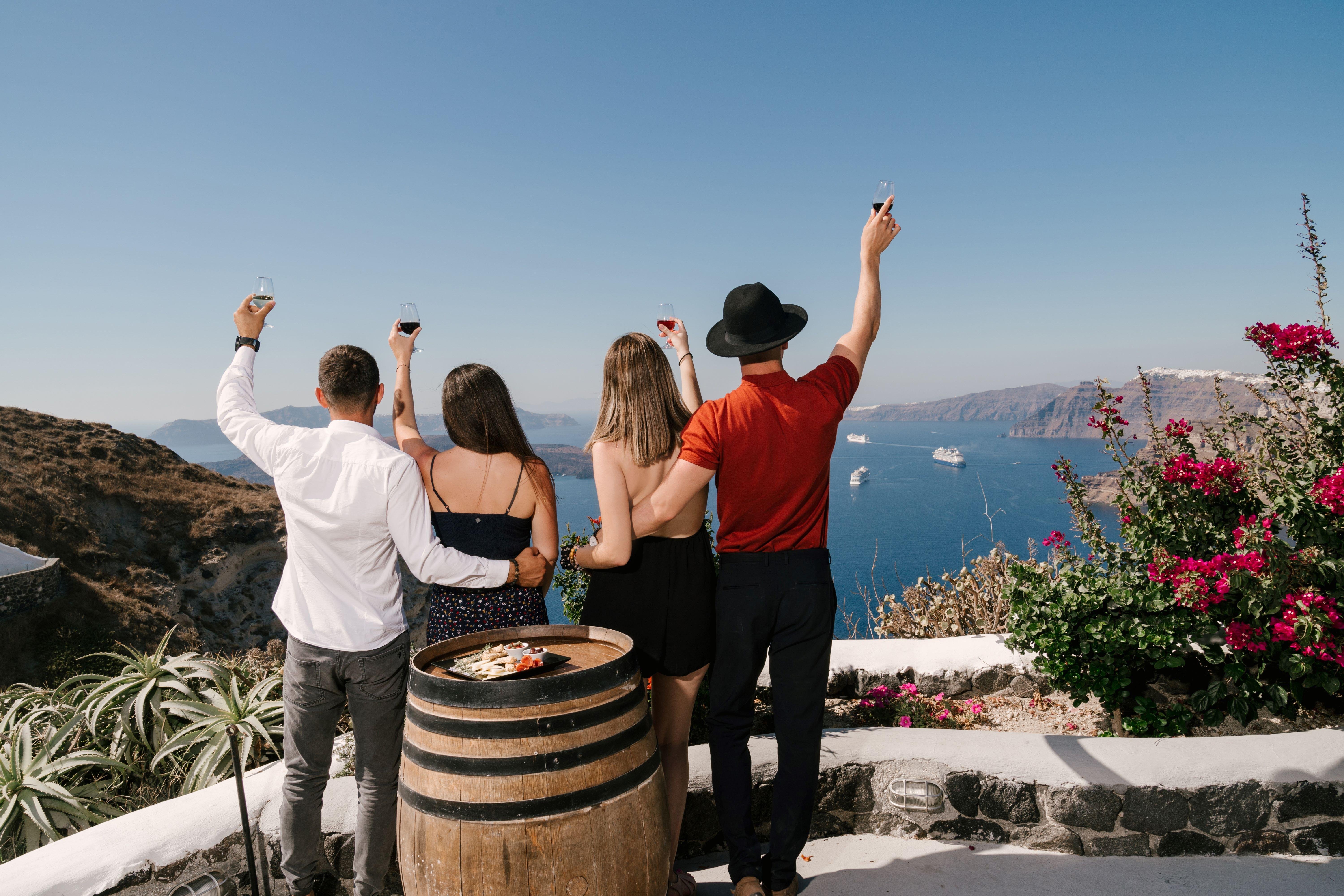
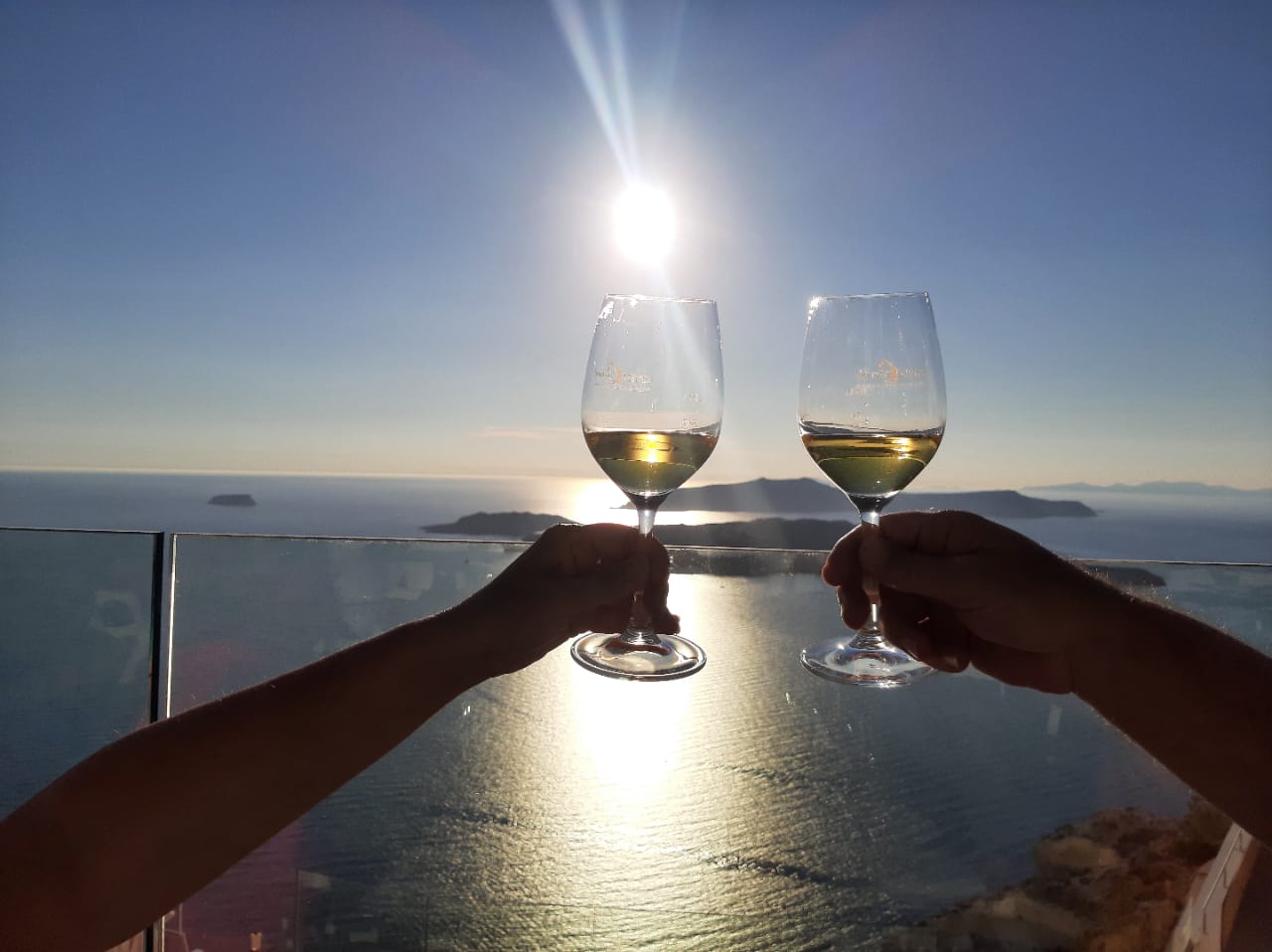
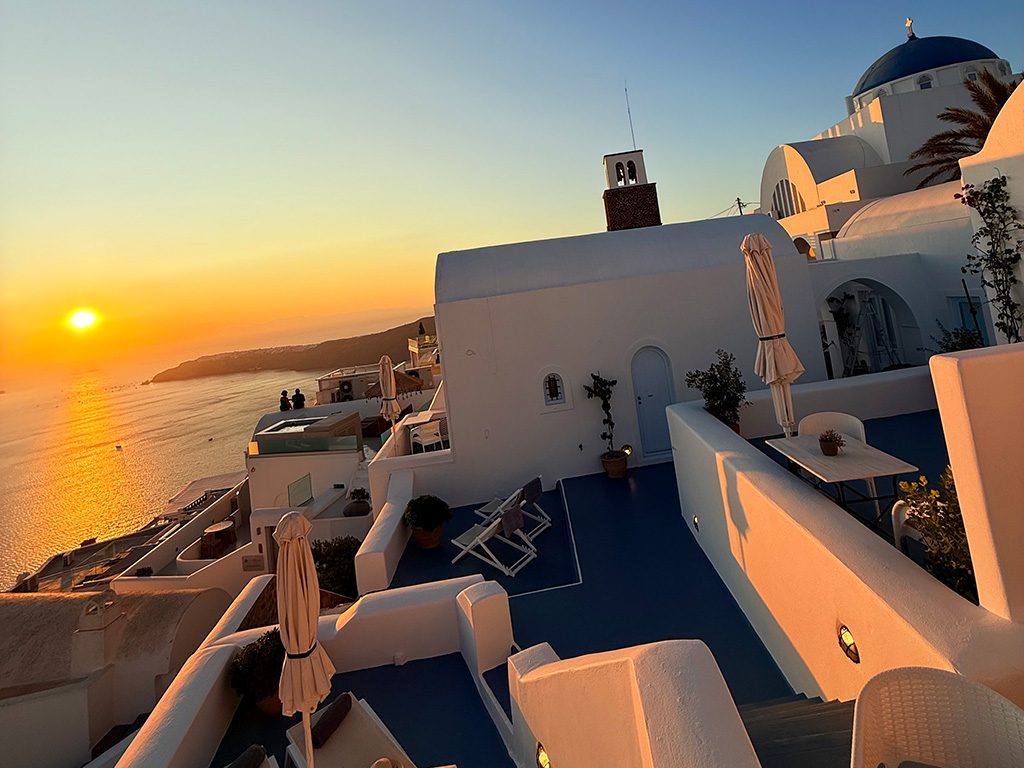
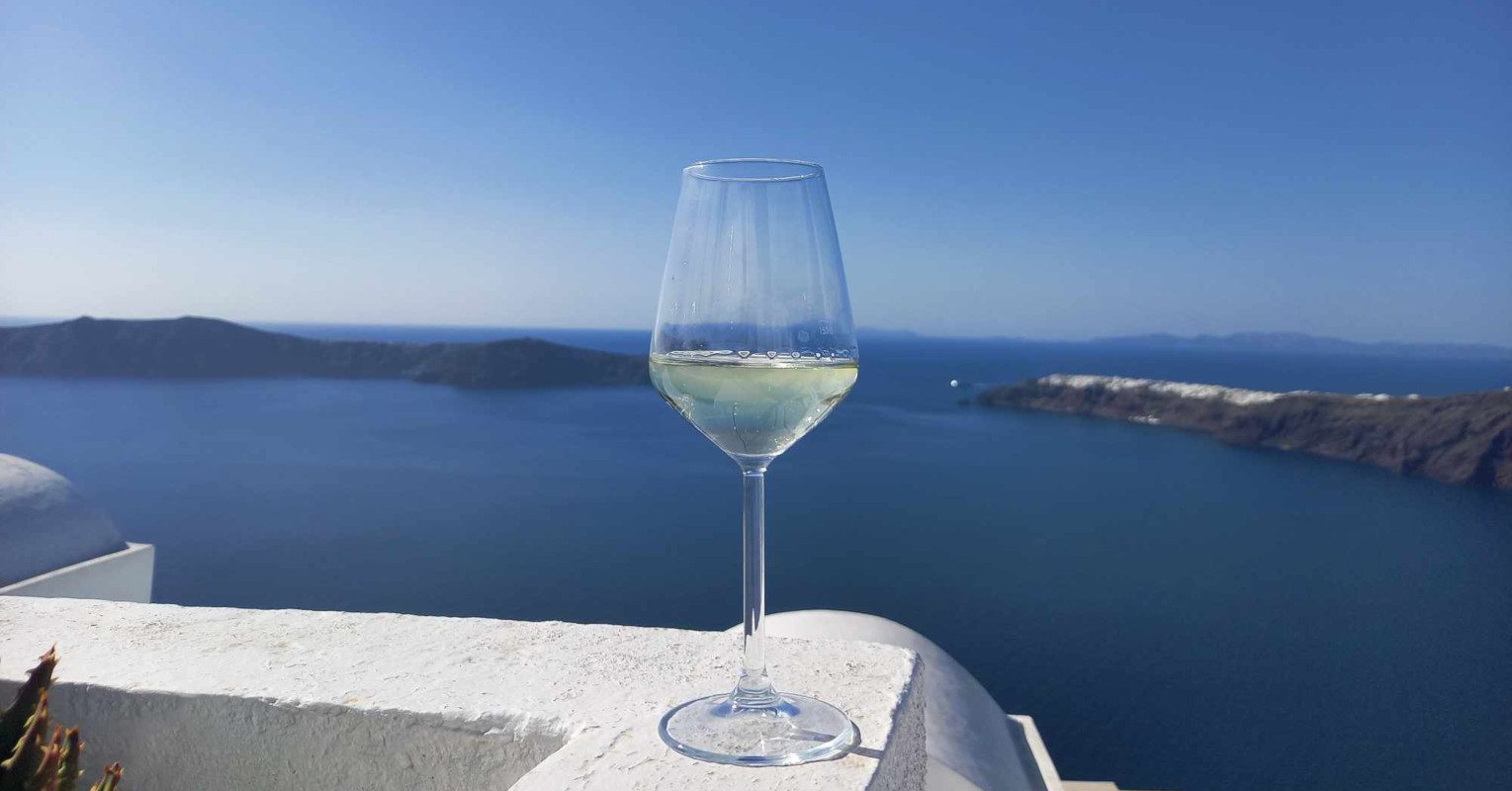
Enjoy panoramic caldera views
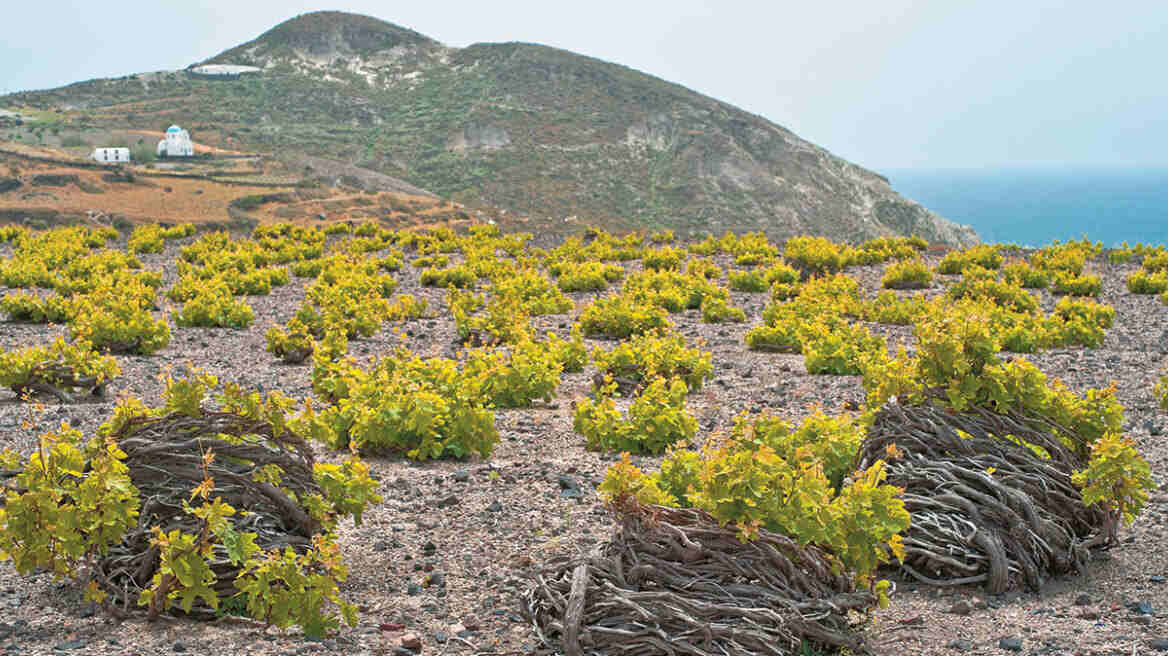
The vines grow in unique baskets called kouloura to protect against winds. This ancient technique is essential to the santorini wine and food tour experience.
These subterranean structures naturally maintain cool temperatures for fermentation. Many date back several centuries.
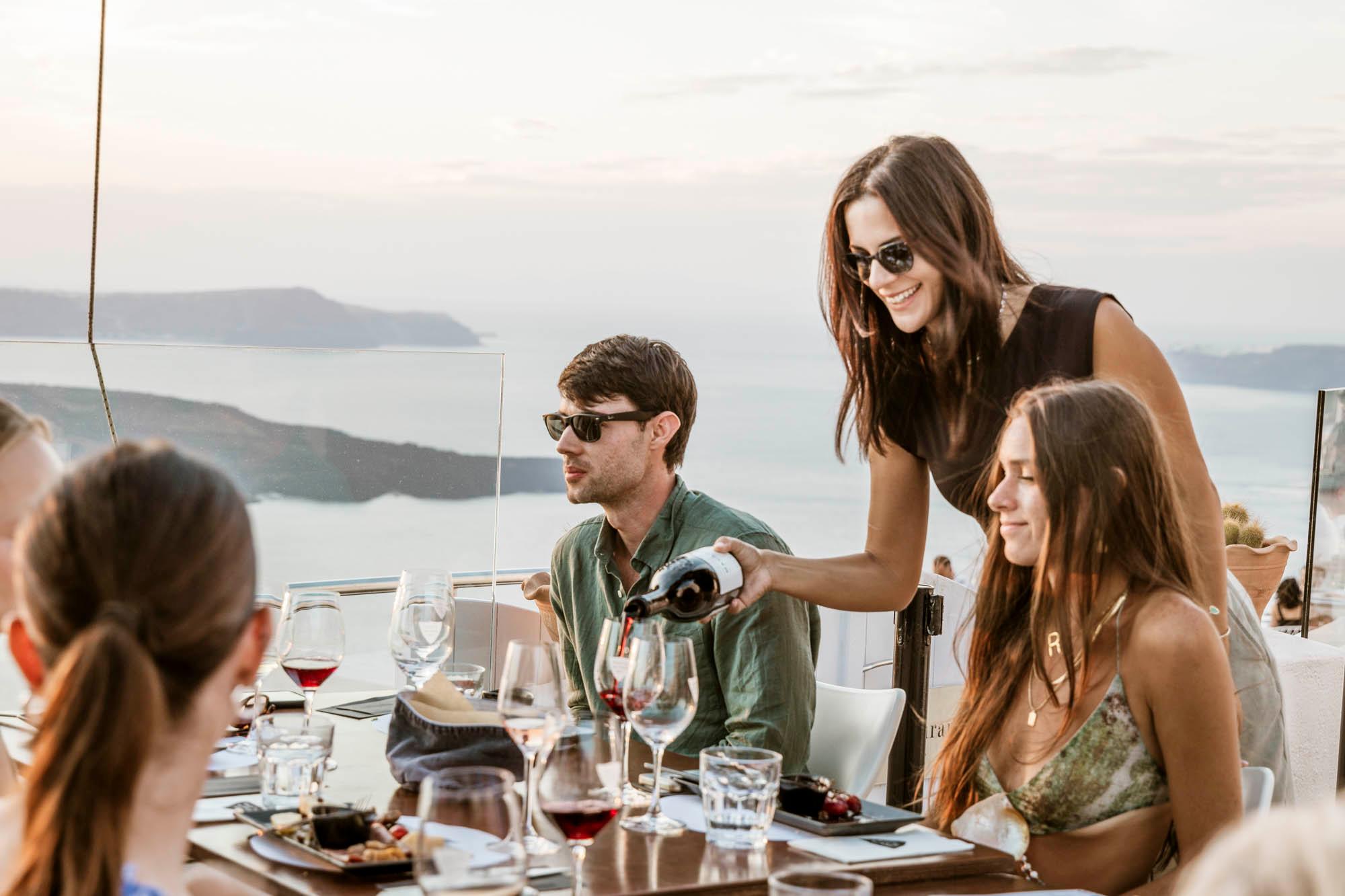
Sample the signature mineral-rich white wine paired with local cheeses. This highlight defines the culinary aspect of the santorini wine and food tour.
Witness the dramatic cliffside landscape from the winery terraces. It serves as a visual backdrop for your santorini wine and food tour.
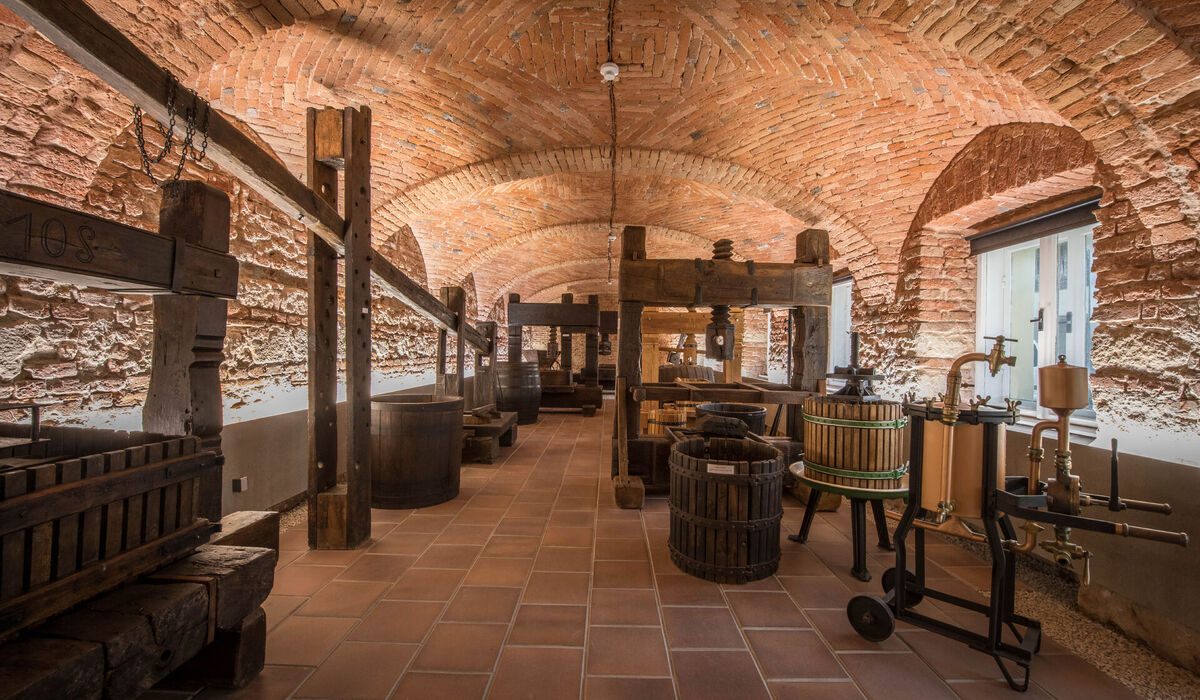
View historic stone presses once used for harvesting grapes. These landmarks illustrate the evolution of the santorini wine and food tour heritage.
You arrive mid-morning at a canava winery in Megalochori, descending stone steps into a barrel-vaulted cellar where temperature holds steady at sixteen degrees year-round.
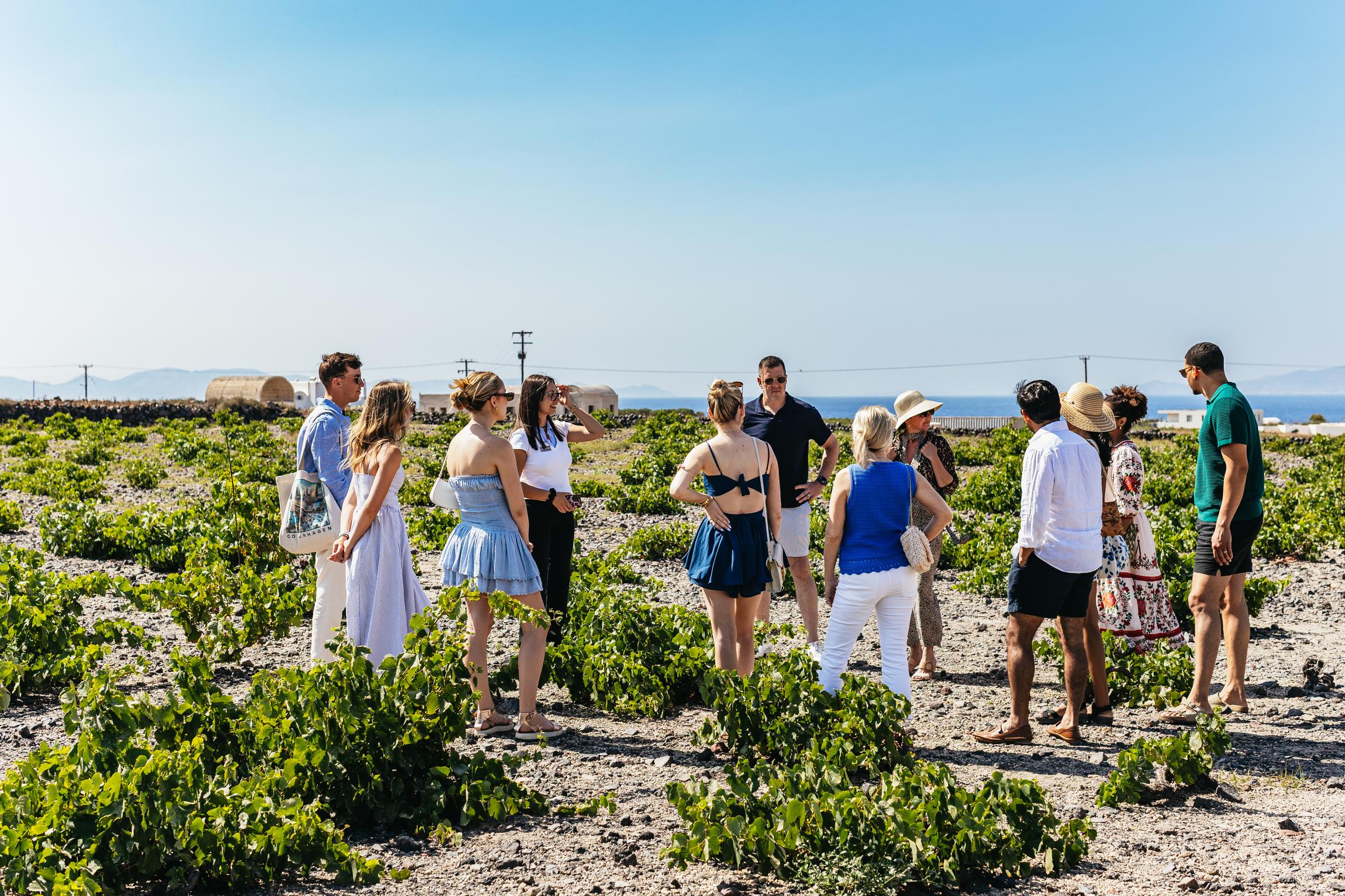
Your guide uncorks a 2024 Assyrtiko, pouring two fingers into a stemmed glass—the first sip carries lemon oil, wet stone, and a saline edge that coats your palate. You step outside to walk the vineyard, crouching beside a kouloura basket where green clusters hang inches from black sand, shielded by dense foliage from the afternoon sun that will push temperatures past thirty-two degrees.
The second estate offers barrel samples: you taste unfinished Nykteri straight from French oak, its raw tannins softened by notes of honeycomb and almond skin. A platter arrives—fava drizzled with olive oil, tomato fritters still warm, cubes of chloro cheese—and you pair each bite with a different pour, noticing how the wine's acidity cuts through the richness of fried batter. Your final stop overlooks the caldera, where you sip a chilled Vinsanto as the sun lowers toward Thirasia, the dessert wine's amber color deepening in slanted light. You leave with two bottles wrapped in paper, their labels marked with the harvest year and the vineyard's coordinates on the island's southern slope.
All the details about your upcoming adventure in one place
Santorini's vines grow in baskets, not rows. The kouloura training method coils shoots into ankle-high nests that shield grapes from Aegean winds and volcanic heat, a technique refined over three thousand years on an island with no spring water.
Assyrtiko, the indigenous white varietal, draws mineral salts from pumice-rich soil deposited by the caldera eruption of 1600 BCE, producing wines with citric acidity and a saline finish unmatched elsewhere in the Cyclades. By 2026, fourteen wineries operate across Santorini, concentrated in Megalochori, Pyrgos, and the terraced slopes above Fira, most occupying canava cellars carved into tufa cliffs during the nineteenth century when island vineyards supplied Russia's imperial court.
Santorini wine and food tour itineraries pair tastings with traditional preparations—fava purée from split yellow peas, tomato keftedes fried with local capers, and chloro cheese aged in brine—dishes shaped by centuries of water scarcity and reliance on drought-resistant crops. Estate Argyros, Gavalas, and Venetsanos anchor the modern wine trail, each maintaining pre-phylloxera rootstock that survived the pest's European sweep because volcanic sand prevented burrowing. Nykteri, a barrel-aged white harvested at dawn to preserve aromatics, and Vinsanto, a sun-dried dessert wine fermented in oak for up to twenty-four months, represent the apex of island winemaking, with production volumes intentionally limited to preserve soil health on slopes where erosion remains a constant threat.
The wine region's resurgence began in the 1980s when cooperative bottling replaced bulk export, allowing families to reclaim ancestral plots and replant abandoned terraces. Today, guided tastings run from 09:00 to 19:00 daily, with most estates charging between fifteen and fifty euros for flights spanning four to six pours. Small-group Santorini wine tours often include cellar access, barrel sampling, and vineyard walks that explain how pruners work each vine by hand, a labor-intensive practice necessitated by the island's prohibition on mechanical harvesting to prevent soil compaction. Sunset experiences extend into evening hours, pairing final pours with caldera views as light fades over Thirasia.

The kouloura training method coils shoots into ankle-high nests that shield grapes from Aegean winds and volcanic heat, a technique refined over three thousand years.
Casual and comfortable attire is recommended for your santorini wine and food tour. Footwear should be stable for walking on cobblestone paths in traditional village settings.
Small personal bags are permitted during the santorini wine and food tour. Security checks may occur upon entry to specific barrel rooms.
Personal photography is encouraged throughout the santorini wine and food tour venues. Please respect the privacy of other guests during tastings.
The santorini wine and food tour experience is primarily focused on adult culinary education. Families should verify age restrictions for specific tasting sessions.
Wineries in Santorini vary in accessibility due to historic architecture and volcanic terrain. Contact your tour operator to confirm specific site infrastructure.
Outside food is not permitted at the wineries. All culinary components of your santorini wine and food tour are provided by the hosting establishment.
Opening hours
09:00–19:00 (Mon-Sat), 10:00–19:00 (Sun)
Address
Various locations, Santorini, Greece
Accessibility
Varies by winery in Megalochori and Fira
Arrival
10:00–17:00
Storage
Not available at most winery sites
Region
Concentrated in Megalochori and Fira
Car
Rental vehicles provide the most flexibility for reaching remote estates. Parking is available at major wineries.
Taxi
Taxis are readily available in Fira for direct transfers. Confirm the rate before departure.
Full refunds are provided for cancellations made within the specified operator window. Ensure your santorini wine and food tour tickets are managed directly through your booking portal.
Recommended time
3-4 hours
A well-paced santorini wine and food tour typically occupies a half-day, allowing ample time for cellar exploration and tasting local Assyrtiko. Following the best arrival window of 10:00–17:00 ensures you enjoy a relaxed atmosphere while sampling regional viticulture. Visitors seeking santorini wine and food tour tours should allocate extra time if they intend to purchase santorini wine and food tour tickets for guided estate walks. Managing your schedule helps bypass the afternoon surge when many groups arrive for sunset views.
Crowd levels through the day
Weather · crowds · average price — dots go green to amber to red as each metric rises.
March to May offers mild weather and blooming flora. Expect fewer crowds than the summer peak.
June to August is very hot. Tours are best enjoyed during the recommended 10:00–17:00 window.
September to October provides perfect grape harvest temperatures. The vineyards are active and vibrant.
Secure your santorini wine and food tour spots early to ensure availability. Weekends tend to fill up quickly.
Drink plenty of water between wine samples. The Mediterranean sun can be deceiving even in autumn.
Mornings can be cool, but the afternoon heat rises quickly. Layers ensure comfort for your santorini wine and food tour.
Pre-arrange taxi transfers if you plan to sample multiple wines. Safety is the priority during your visit.
The sommeliers are experts on viticulture. Engage them about the unique volcanic soil during your santorini wine and food tour.
Santorini's wine tradition reaches back three and a half millennia, making it one of the Mediterranean's oldest continuously cultivated viticultural zones. Archaeologists working at Akrotiri in 1967 uncovered Bronze Age wine presses beneath volcanic ash, evidence that islanders were fermenting grapes before the catastrophic eruption of 1600 BCE buried the settlement. The Minoan inhabitants had already developed sophisticated fermentation techniques, storing amphorae in cellars that maintained stable temperatures year-round. When Phoenician and later Venetian traders arrived, they recognized the commercial value of Santorini's naturally sweet wines, which survived long sea voyages without spoiling due to high sugar content and volcanic soil minerality. The Venetian occupation from 1207 to 1579 formalized the export trade. Merchants established the first documented winery cooperatives in Pyrgos and Megalochori, shipping barrels to Venice, Constantinople, and ports across the Adriatic. The unique kouloura vine-training method emerged during this period as a practical response to Santorini's punishing winds and summer drought. Farmers coiled vines into low basket shapes, protecting grape clusters inside the circular formation while leaving minimal surface area exposed to desiccating meltemi gusts. This labor-intensive technique survives today as a defining feature of santorini wine and food tour experiences, with nineteenth-century vineyards still employing the same geometry their ancestors shaped by hand. Phylloxera devastated European vineyards between 1863 and 1890, but Santorini's ungrafted Assyrtiko vines escaped due to the island's volcanic soil composition, which the root louse could not penetrate. By 1900, Santorini was one of few Mediterranean regions still producing wine from pre-phylloxera rootstock. The cooperative movement formalized in 1947 when twelve growers founded Santo Wines, consolidating small family plots into a viable export operation. Modern santorini wine and food tour tickets now provide access to cellars where Assyrtiko, Aidani, and Athiri grapes are pressed using both traditional basket presses and temperature-controlled stainless steel tanks, bridging four thousand years of uninterrupted production.
Bronze Age wine presses at Akrotiri are buried by volcanic eruption, preserving evidence of Minoan fermentation.
Venetian merchants formalize export cooperatives in Pyrgos and Megalochori, shipping sweet wines across the Adriatic.
Kouloura vine-training method becomes standard practice to protect grape clusters from meltemi winds and drought.
Phylloxera epidemic destroys European vineyards but Santorini's volcanic soil prevents root louse infestation, preserving ungrafted vines.
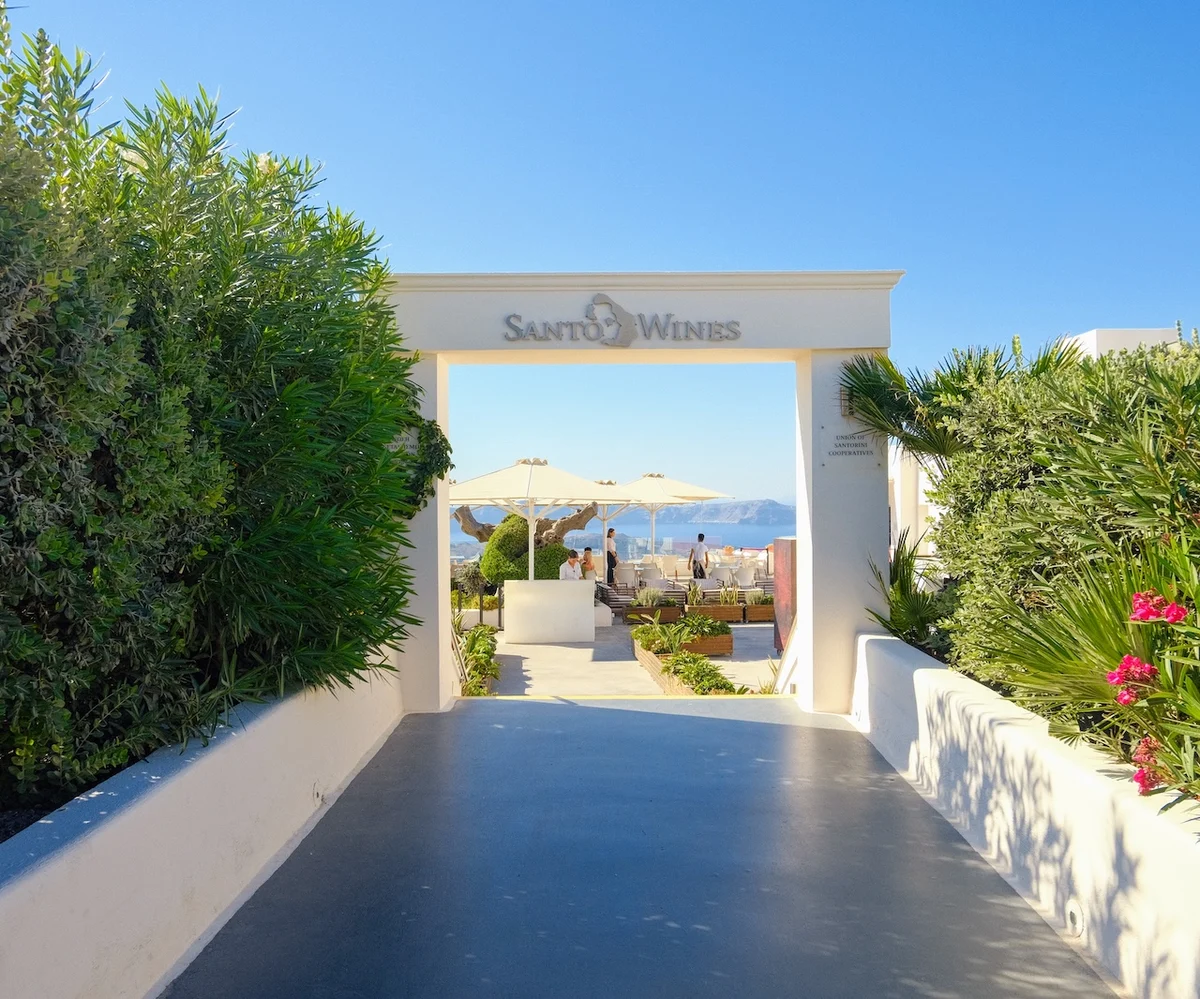
Twelve growers establish Santo Wines cooperative, consolidating family vineyards into a modern export operation.
Greek government grants Protected Designation of Origin status to Santorini wines, recognizing Assyrtiko as a protected varietal.
Wine tourism infrastructure expands as wineries add tasting rooms and culinary programs, transforming production sites into visitor destinations.
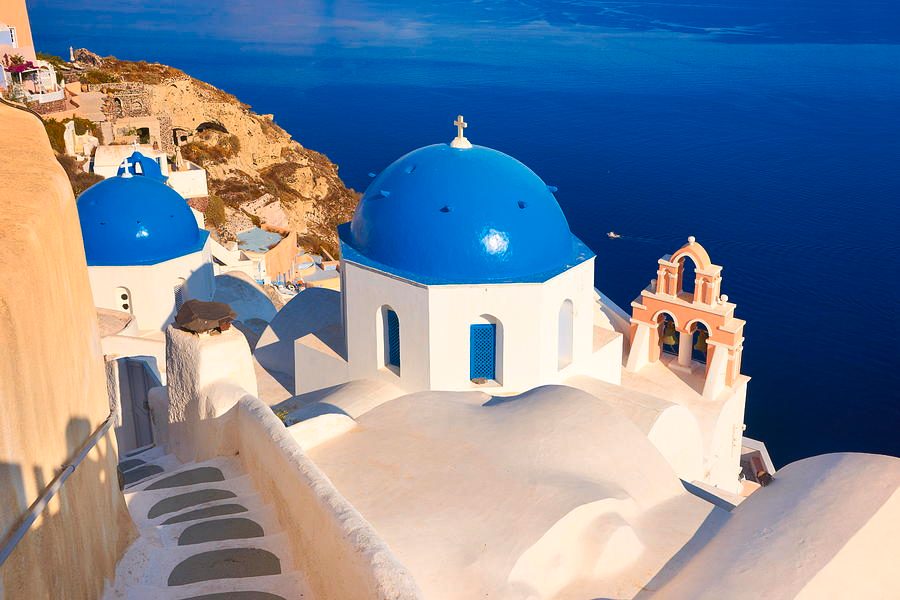
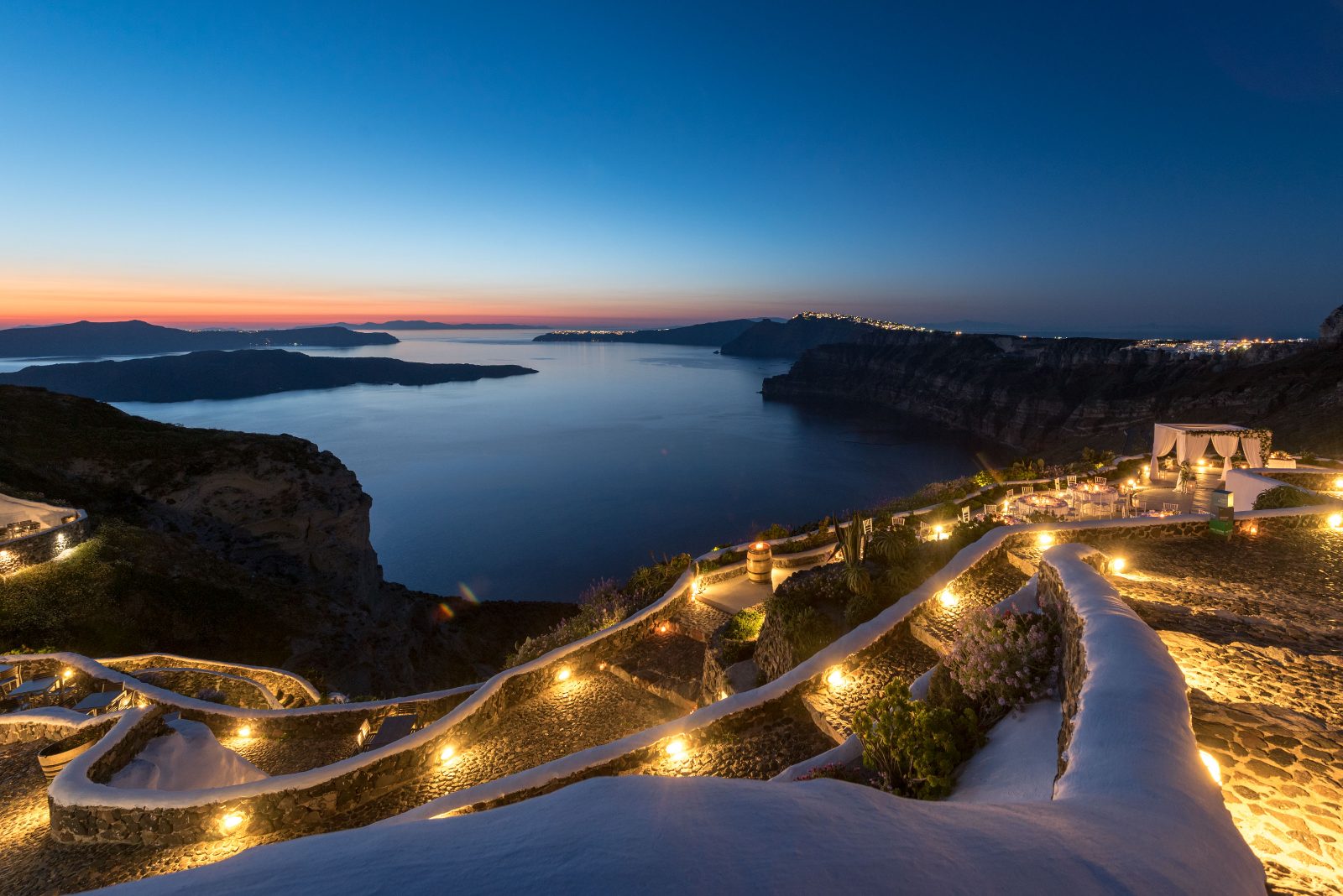
Position yourself at the edge of the lower terrace to capture the dramatic cliffside architecture against the Aegean Sea. This spot offers an expansive backdrop of the caldera for your santorini wine and food tour photography.
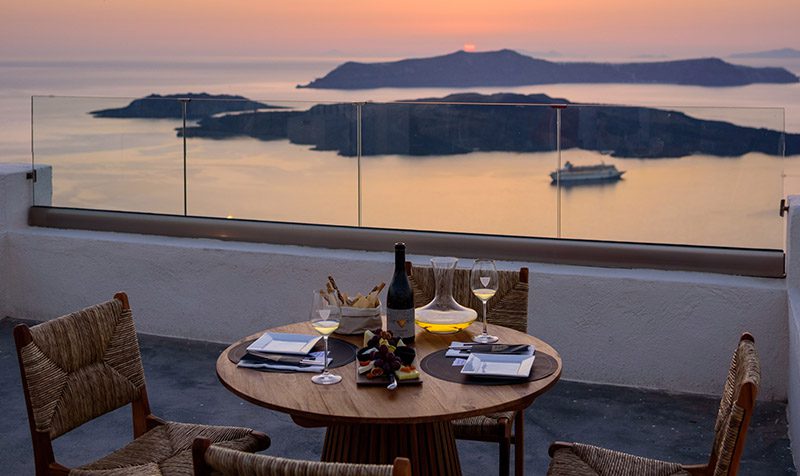
Stand near the marble railings overlooking the vineyards to frame the volcanic islands in the distance. This location is popular for santorini wine and food tour tours seeking wide-angle landscape shots.
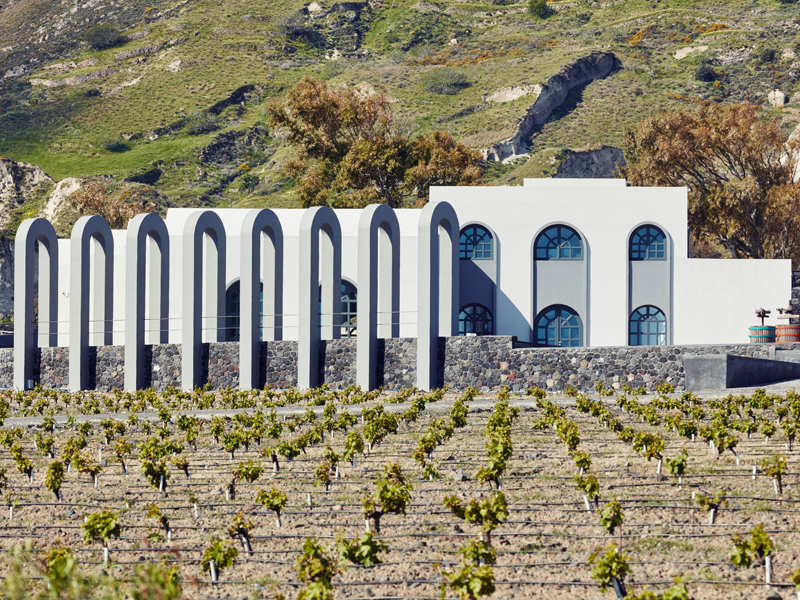
Focus your lens on the traditional stone arches and modern minimalist lines of the main building. These textures provide a refined aesthetic for santorini wine and food tour tickets holders capturing the island's viticulture.
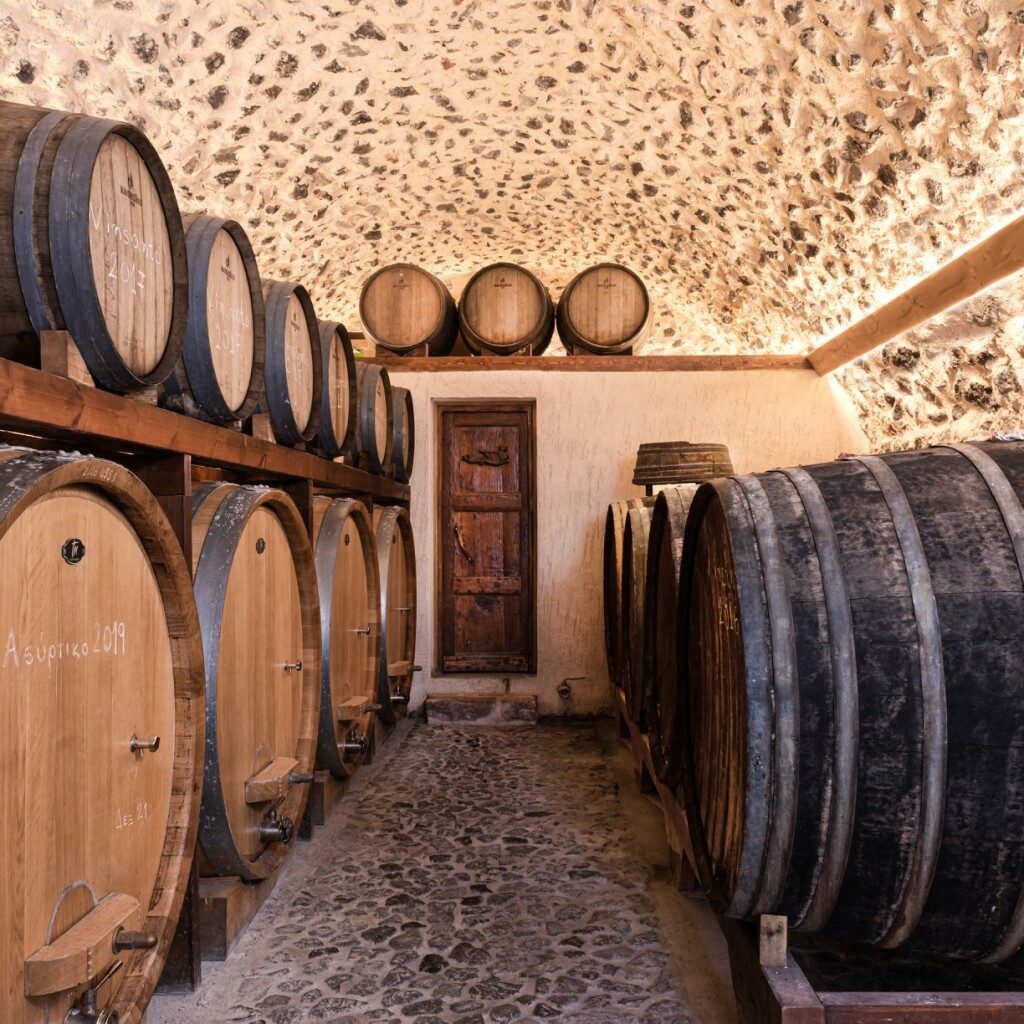
Capture the rustic charm of the ancient barrel-aging cellar entrance in Megalochori. This intimate setting is ideal for those documenting their santorini wine and food tour tour with authentic local character.
Exploring Santorini wineries is a sophisticated endeavor for families who appreciate the local viticulture, though parents should prepare for terrain better suited to older children than toddlers. A santorini wine and food tour offers a unique lens into the island's volcanic terroir and historic grape varieties.
The cobblestone paths and volcanic terrain of many vineyards make strollers difficult to manage; a carrier is a practical choice for those with infants.
Most estates provide basic restrooms, but baby-change stations are rarely available in these historic structures, so please plan accordingly.
School-aged children often enjoy the expansive grounds and learning about the viticulture process, whereas the environment is less conducive to the needs of energetic toddlers.
To maximize your enjoyment, consider booking santorini wine and food tour tours that offer shorter durations to keep engagement high for younger participants.
While your santorini wine and food tour tour will focus on pairing local Assyrtiko or Vinsanto, carry your own simple snacks as dedicated children's menus are not a standard amenity at these venues.
Since most tastings occur in open-air settings or traditional cellars with limited indoor space, always verify your santorini wine and food tour tickets if weather conditions look uncertain.
Exploring the island's volcanic terroir is best complemented by local gastronomy, whether you are planning a santorini wine and food tour near Megalochori or seeking refined plates in Fira. While many estates focus on indigenous Assyrtiko, you will find excellent farm-to-table dining and traditional Aegean tavernas within a short walk of major tasting rooms.
Located in the heart of Megalochori, this spot serves creative Greek meze that pair perfectly with local viticulture products. It is ideal for those seeking santorini wine and food tour tours with an authentic, relaxed atmosphere.;Selene
Everything you need to know for your journey
The wineries typically operate from 09:00 to 19:00, with Sunday hours starting at 10:00. This provides ample time for a santorini wine and food tour.
Winery grounds offer free entry, though tastings typically range from 15 to 50 EUR. You can visit the winery grounds without a booking, but tours often require them.
The best arrival window is 10:00–17:00. This avoids the afternoon heat and large crowds common during sunset for your santorini wine and food tour.
The tour focus is culinary, so check age policies with the operator. Most guests on a santorini wine and food tour are adults.
You can purchase tickets through our verified booking inventory. This ensures your spot is saved for your preferred santorini wine and food tour.
Outside food is prohibited at the vineyards. Your santorini wine and food tour includes curated food pairings.
Accessibility varies by winery location in Megalochori and Fira. Always verify specific site features before your santorini wine and food tour.
Bring water, sunscreen, and a hat. Comfortable shoes are vital for a santorini wine and food tour through the vineyards.
Full refunds are available based on the operator's policy. Check your confirmation email after booking your santorini wine and food tour.
Ancient Minoan settlement preserved by volcanic ash.
Historical mansion housing local art and archives.
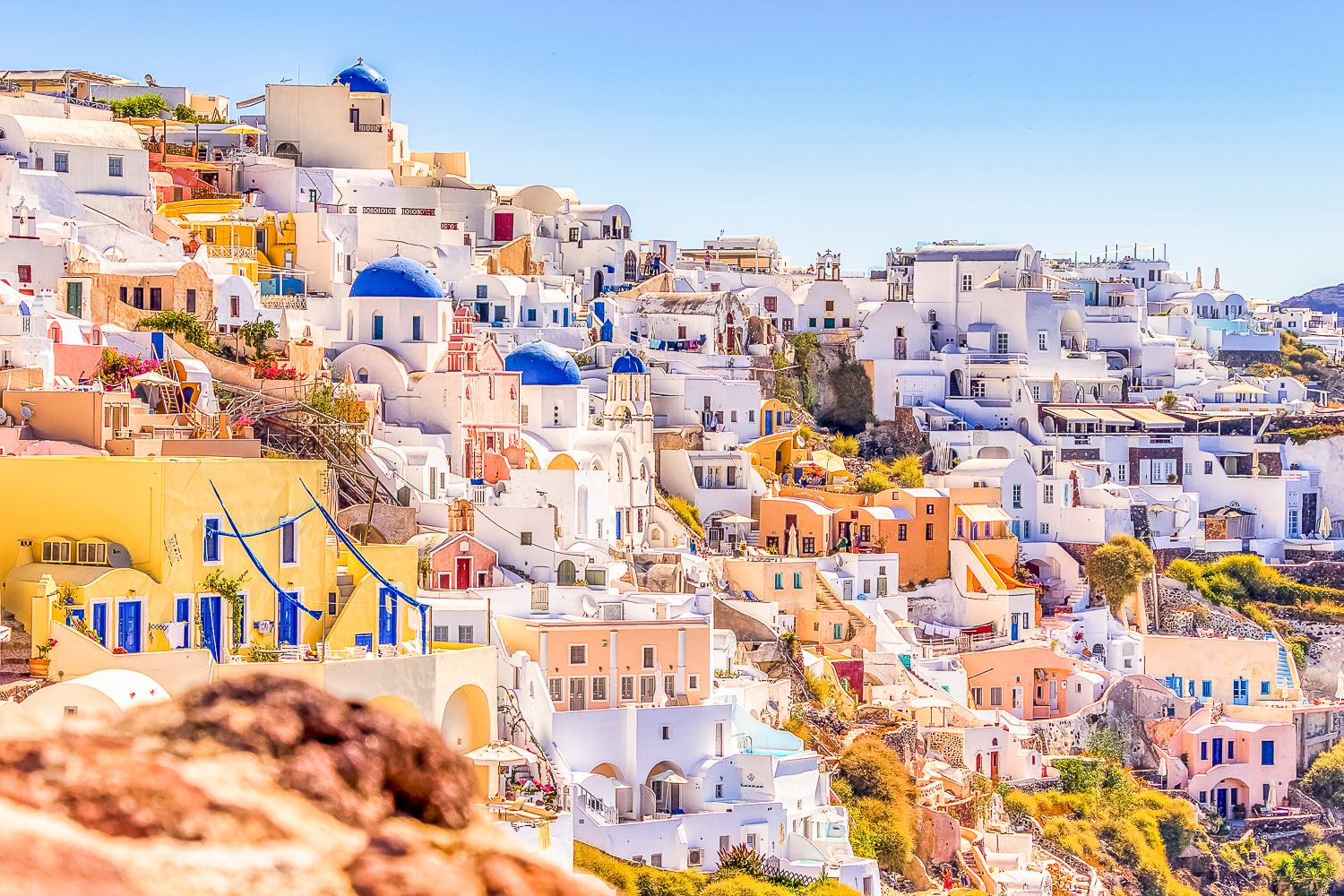
Iconic white architecture in the center of Fira.
The main public square serving as a central meeting point.
High-end caldera view properties in Fira.
Restored homes in Megalochori village.
Comfortable lodging near the winery belt.
Join thousands of happy travelers who have discovered this incredible experience
Book Your Experience Now